Gearless
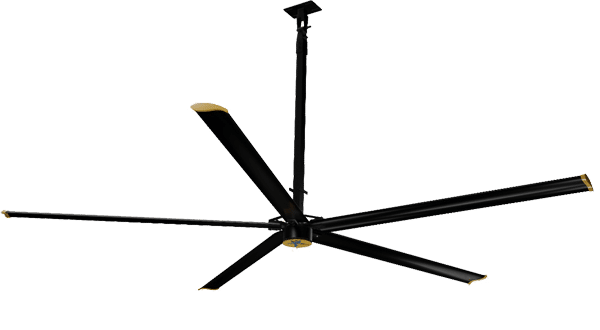
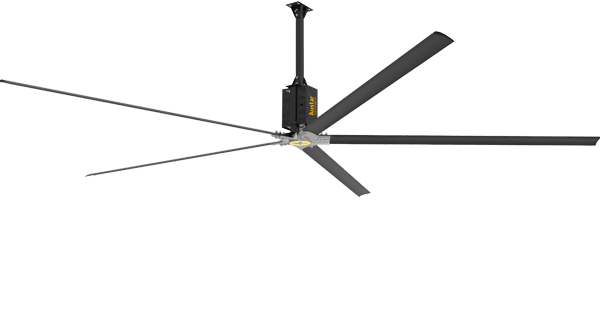
Gearless 16 Feet HVLS Fan
- Diameter
- 16 ft
- Air Delivery
- 355,000 CFM
- Coverage
- up to 10,000 sq.ft.
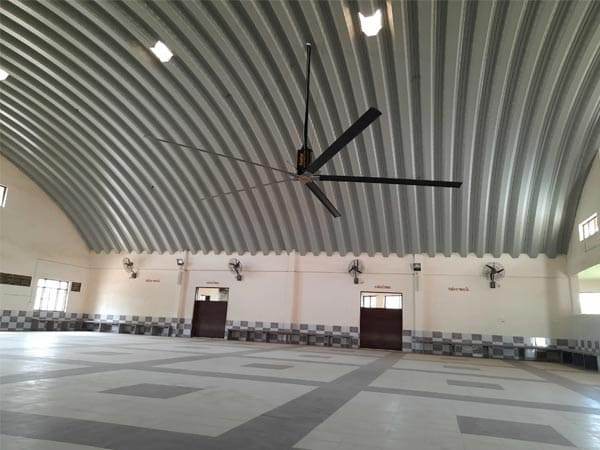
School assembly halls and examination halls fill completely for a few hours and then sit empty, which makes air conditioning hard to justify. Conventional ceiling fans in a high hall are ineffective and their noise interferes with speech from a stage or podium. In libraries and reading rooms, the requirement is different again — air movement has to be gentle enough not to disturb papers on a desk.
A small number of HVLS fans covers an entire hall from ceiling height, running quietly enough that a speaker at the podium carries to the back row. In a library, low-speed operation gives continuous, imperceptible air movement that keeps the room fresh without lifting loose paper. Running cost for the few hours a day these spaces are occupied is negligible, and there is no plant room, ducting or annual HVAC contract to budget for.
Typical selections for this facility type. Final size and quantity come out of the feasibility study once we have your roof height and layout.
Gearless
Gearless
Geared
The hanging structure uses IS 2062 tested material welded by certified welders, with SS wire rope wrapped around every bolted joint as secondary restraint, plus anti-fall S bends at the motor-to-hub coupling. Safety provisions are set out in full on the Safety & Certification page.
Speed is limited at commissioning for exam halls and libraries. At low speed the air movement is felt but does not lift loose paper.
Yes. Gearless models run below 40 dB, which is well below normal speech level from a podium.
A 20 ft fan running two hours a day costs very little at any Indian tariff. Put your own numbers into the ROI calculator for a precise figure.
Industry is pre-selected. Add your dimensions and we come back with a fan size, a quantity and a layout drawing.
Send us the basics and our team will respond within one working day.
Give us your shed bay by bay and we come back with a fan size, a quantity and a layout drawing — no charge, no obligation.
Measure each bay on its own — length, width, and roof height from the floor to the underside of the truss. Then take two or three photos looking straight up at the roof, so we can read the roof type and the hanging arrangement.