Gearless
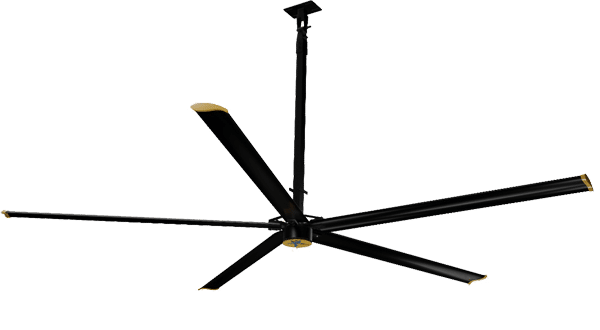
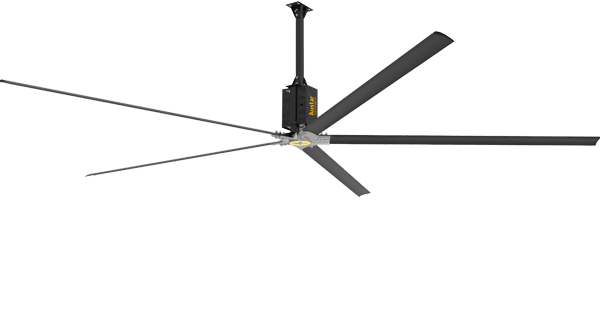
Gearless 16 Feet HVLS Fan
- Diameter
- 16 ft
- Air Delivery
- 355,000 CFM
- Coverage
- up to 10,000 sq.ft.
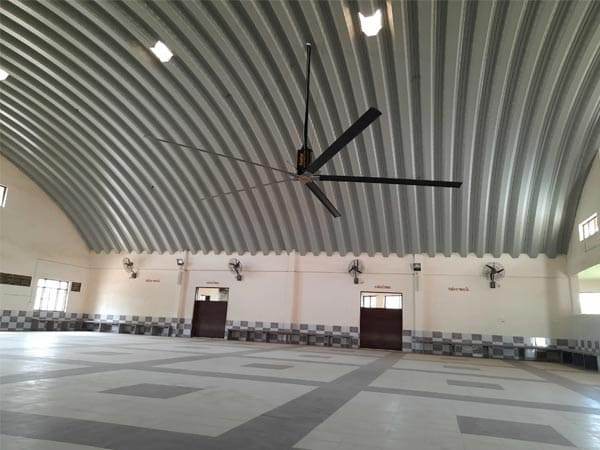
A gym floor generates heat and humidity fast, and the smell that comes with still air is the single most common complaint members raise. Wall fans create a directional draught that is uncomfortable on a treadmill and disruptive on a badminton court, where shuttle flight is affected by any concentrated air movement. High ceilings mean the hot layer sits well above the members using the space.
A ceiling mounted HVLS fan gives the whole floor even, gentle air movement without a directional draught. Destratification pulls the hot layer down and mixes it, so the volume equalises instead of stacking. Continuous air exchange at low velocity carries away humidity and odour, which is what members actually notice. On badminton and shuttle courts, low speed operation gives comfort while keeping air velocity within a range that does not affect play.
Typical selections for this facility type. Final size and quantity come out of the feasibility study once we have your roof height and layout.
Gearless
Gearless
Geared
At low speed the air velocity at court level is gentle enough not to affect shuttle flight, and fans are positioned off the court centreline. Many courts run them between games at higher speed and lower during play.
Yes — that is mostly a still-air problem. Continuous air movement carries humidity and odour away instead of letting it settle at floor level.
Gearless models run below 40 dB, so music and instruction carry normally.
In many gyms it can, and where AC stays it lets you raise the set point. The comparison for your space is part of the feasibility study.
Industry is pre-selected. Add your dimensions and we come back with a fan size, a quantity and a layout drawing.
Send us the basics and our team will respond within one working day.
Give us your shed bay by bay and we come back with a fan size, a quantity and a layout drawing — no charge, no obligation.
Measure each bay on its own — length, width, and roof height from the floor to the underside of the truss. Then take two or three photos looking straight up at the roof, so we can read the roof type and the hanging arrangement.