
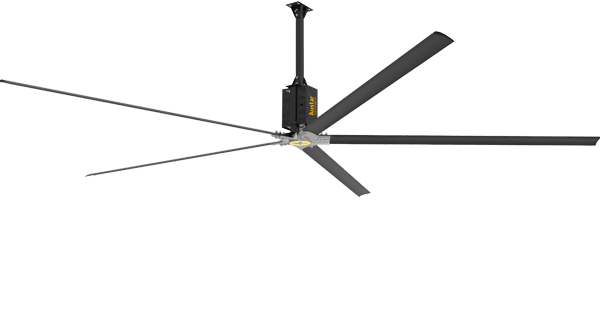
Geared
16 Feet HVLS Fan
- Diameter
- 16 ft
- Air Delivery
- 185,000 CFM
- Coverage
- up to 10,000 sq.ft.
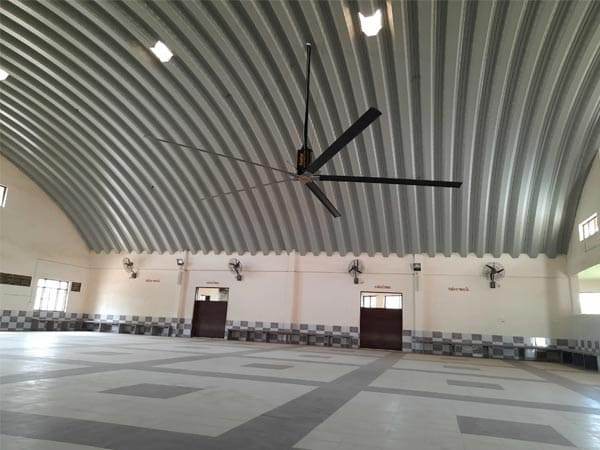
Heat stress in dairy cattle is measurable and expensive. Above a temperature-humidity index threshold, feed intake drops, milk yield falls and conception rates suffer. Animal sheds are typically open-sided with a low-slope roof, so hot air sits under the sheet and humidity from the animals themselves builds up. Wall mounted fans reach only the animals nearest to them and cause noise and stress in the ones directly in front.
HVLS fans give the whole shed the same gentle, continuous air movement — which is what cattle need, rather than a high-velocity blast. The moving air carries away body heat and moisture, holds down ammonia concentration, and keeps bedding drier, which in turn helps udder health. Because the fans are quiet and the airflow is broad rather than directional, animals settle under them instead of avoiding them. Most dairy operators see the return in yield stability through the summer months.
Typical selections for this facility type. Final size and quantity come out of the feasibility study once we have your roof height and layout.
Geared
Geared
Geared
No. HVLS air movement is slow and broad, which is the opposite of a high-speed wall fan. Cattle typically move towards the covered area rather than away from it.
Reducing heat stress helps hold summer yield closer to the annual average. The effect depends on herd, feed and existing shed conditions, so we do not publish a fixed percentage.
Yes. Continuous air movement keeps bedding drier and stops ammonia concentrating at animal level, which is one of the main reasons dairy operators install these fans.
Structure is powder coated, the panel enclosure is IP54 rated, and fasteners are high tensile with Nyloc nuts. Corrosion protection is specified for the environment at the quote stage.
Industry is pre-selected. Add your dimensions and we come back with a fan size, a quantity and a layout drawing.
Send us the basics and our team will respond within one working day.
Give us your shed bay by bay and we come back with a fan size, a quantity and a layout drawing — no charge, no obligation.
Measure each bay on its own — length, width, and roof height from the floor to the underside of the truss. Then take two or three photos looking straight up at the roof, so we can read the roof type and the hanging arrangement.