Geared
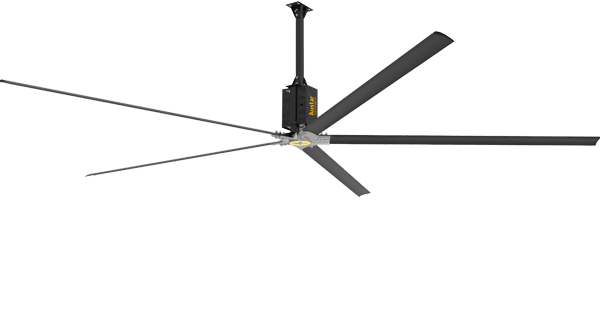
20 Feet HVLS Fan
- Diameter
- 20 ft
- Air Delivery
- 350,000 CFM
- Coverage
- up to 16,000 sq.ft.
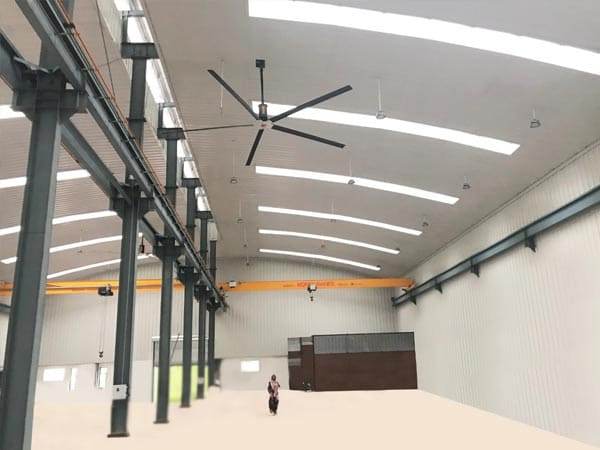
Automotive plants are large, long and staffed densely along the line. Weld shops and press shops generate serious heat load; assembly halls are cooler but very wide, so any localised cooling leaves most of the line untouched. Line-side pedestal fans obstruct material movement and trolley paths, and heat-related fatigue shows up directly in takt adherence and defect rates towards the end of a shift.
Overhead HVLS fans give uniform air movement down the full length of the line without putting anything on the floor. Mounted above the line, they cover both the operator stations and the material staging areas beside them. The perceived temperature drop of 4 – 5 degrees holds through the whole shift, and because a small number of large fans replaces a large number of small ones, cable runs and maintenance points reduce sharply. In plants that already run HVAC, HVLS fans allow the set point to be raised while comfort stays the same.
Typical selections for this facility type. Final size and quantity come out of the feasibility study once we have your roof height and layout.
Geared
Geared
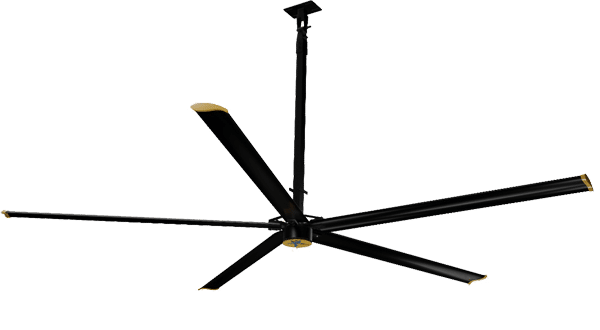
Gearless
Yes. The VFD supports standard interfaces so start/stop, speed and direction can be driven from the building management system, and fan status fed back.
Fans are excluded from paint booths and clean zones, and layout is planned so air movement does not cross into them. This is addressed at the feasibility stage.
Fan positions are set outside the crane sweep and hook path. We take the crane general arrangement drawing at site survey and plan around it.
Most plants can, because the wind chill effect maintains the same comfort level at a higher air temperature. The saving on HVAC load is often larger than the saving on fans.
Industry is pre-selected. Add your dimensions and we come back with a fan size, a quantity and a layout drawing.
Send us the basics and our team will respond within one working day.
Give us your shed bay by bay and we come back with a fan size, a quantity and a layout drawing — no charge, no obligation.
Measure each bay on its own — length, width, and roof height from the floor to the underside of the truss. Then take two or three photos looking straight up at the roof, so we can read the roof type and the hanging arrangement.